
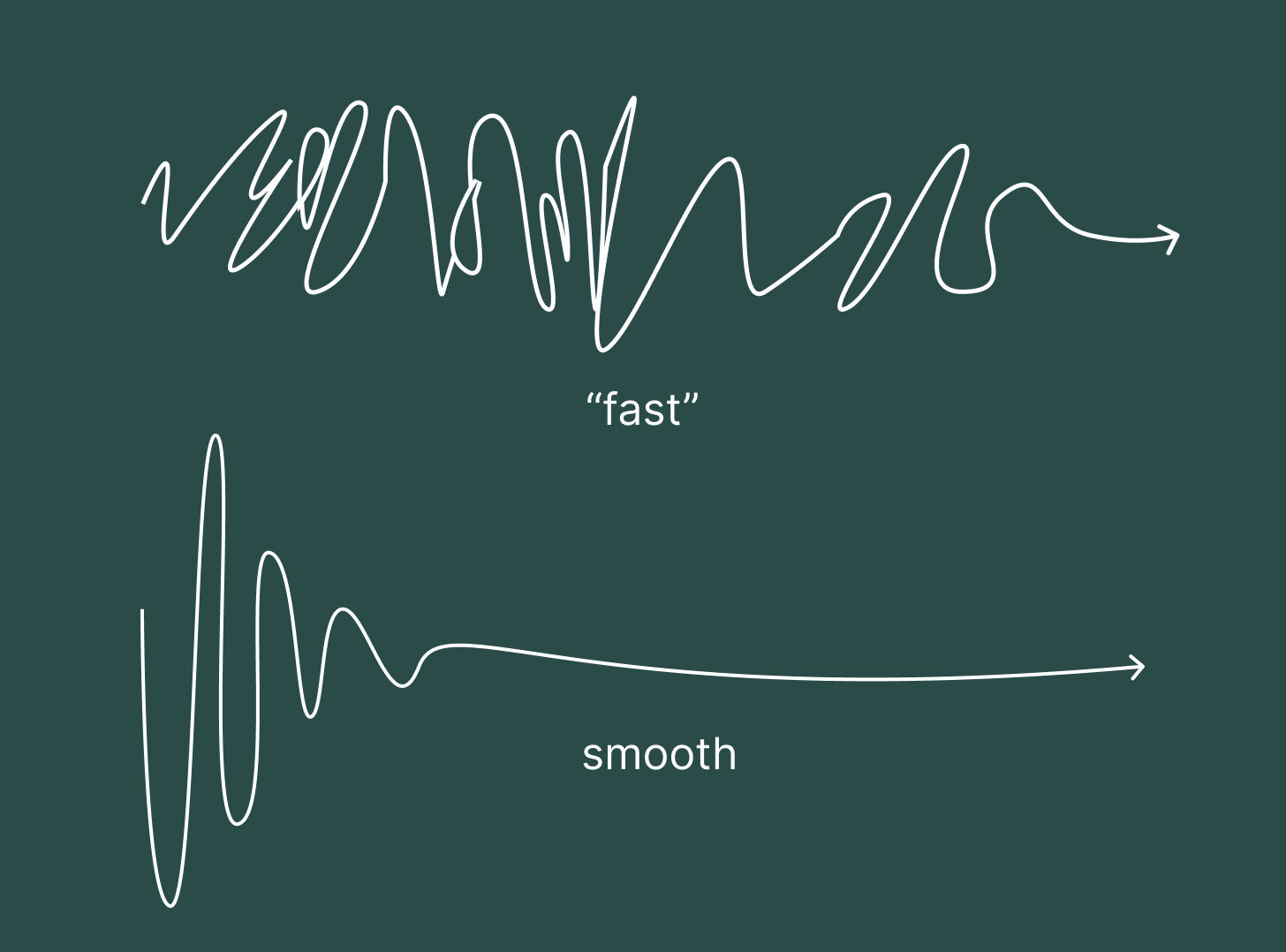
slow is smooth, smooth is fast
a phrase i've heard in org design and now climbing

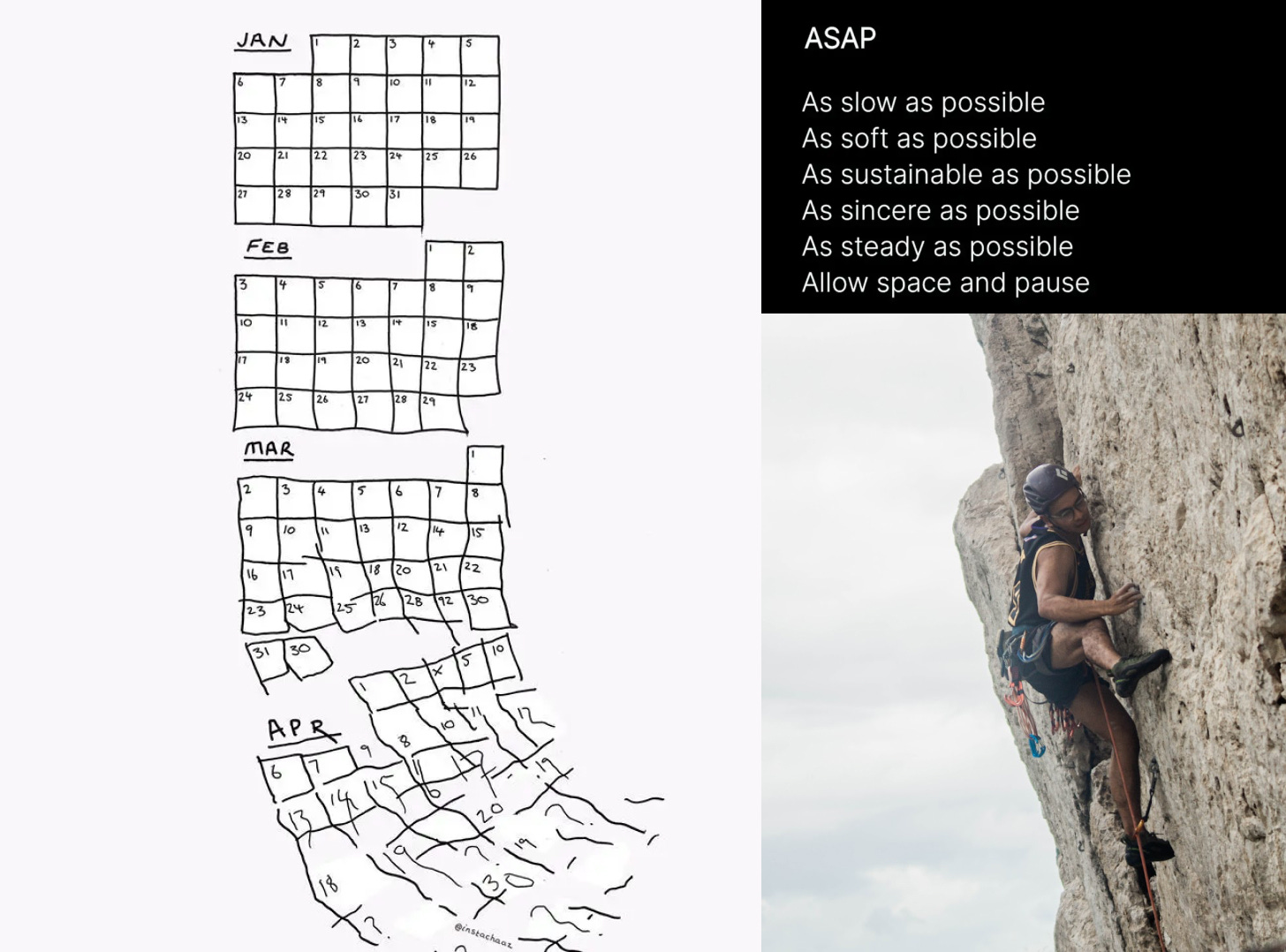
I first heard “slow is smooth, smooth is fast” from an old coworker, Spencer Pitman. Spencer had a fascinating background: head of product, strategy consulting, engineering, and… climbing guiding.
“Guiding in the mountains taught me everything about guiding organizational change,” he told me. Preparedness. Assessing risk. Having a plan but adapting when circumstances change. All of it applied directly to the org design consulting work we did together.
On every engagement, he’d say to our clients:
Slow is smooth, smooth is fast.
Eight years later, I’m (coincidentally) training to become a climbing guide myself. In my guiding courses, my instructors say that phrase.
Slow is smooth, smooth is fast.
I’ve grown to appreciate the phrase more with experience.
I mean… I learned it the hard way.
One time, Ivan and I got benighted. We unexpectedly had to spend the night on the wall. We took much longer than we thought to complete the climb and couldn’t find the rappel rings once it got dark.
We were climbing in Yosemite(East Buttress of Middle Cathedral if you’re curious). We started at 10am, fully convinced we’d be up and down before sunset. I left my daypack at the base because there were chimneys (yes, like Santa climbing up a chimney). Before starting the climb, I thought that I’d move faster through the chimneys without a pack. So I left my pack at the base.
That pack had my headlamp.
That mistake meant I climbed chimneys in the dark. We moved slower than planned, lost daylight, and ended up sleeping on a ledge. With ants. Thankfully, it didn’t drop below 37°F that night.
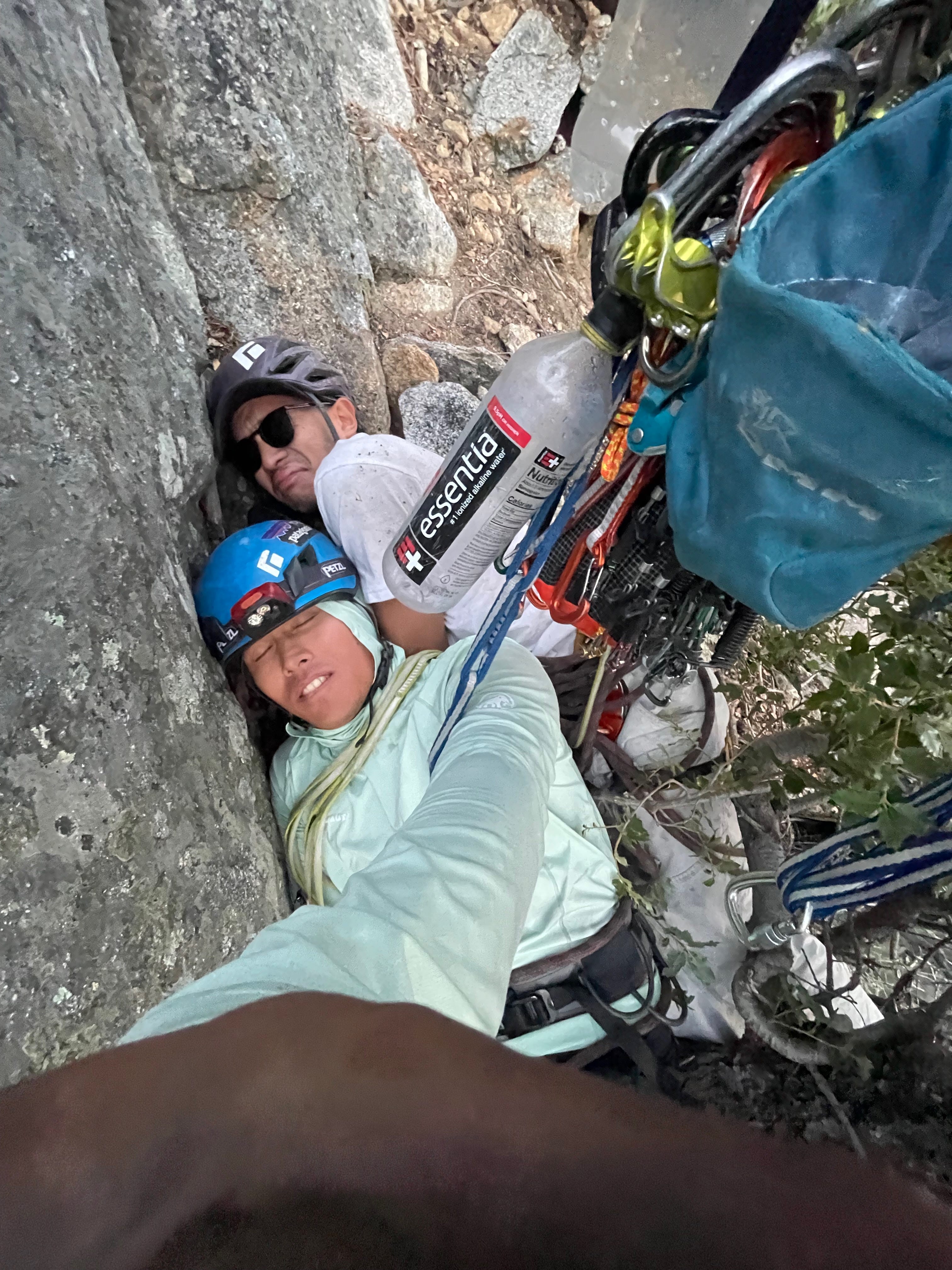
Basically our desire to climb this fast delayed our completion by an extra day. We wanted to go fast, which led to us going slow. Thankfully our friends had prepared us ramen that morning.
It’s the same with organizational change
Our desire to go fast can lead us to go slower than we’d like.
I’ve seen teams move quickly into new operating models before decision rights were clear, shared context existed, or team membership had stabilized. Not getting the results we want? Reorg. Six months later, leaders were frustrated that nothing had sped up.
In reality, they’d optimized for motion. Not smoothness.
You’ve probably experienced:
A reorg that shipped before decision rights were clear
A strategy announced before teams had the context, resources, or capacity to execute
A leadership team that canceled retros last-minute to “give time back”
My job has often been to help organizations slow down and practice on purpose.
Ambitious goals or new directions require unlearning old habits and practicing new ways of working. That practice will feel… slow. At first. That’s not a bug. It’s a feature.
Because when we do it right, we become smooth. And smoothness is what affords speed.
The Curse of Knowledge
According to the Accidents in North American Climbing reports published by the American Alpine Club, the majority of reported climbing accidents involve experienced climbers. Not beginners. And most are caused by human error rather than gear failure. Belay mistakes, rushed rappels, and skipped safety checks dominate the reports.
From a 2000 paper, Staying Alive, written by a former National Park Service Search and Rescue member:
Most Yosemite victims are experienced climbers: 60% have been climbing for 3+ years, lead at least 5.10, are in good condition, and climb frequently. Short climbs and big walls, easy routes and desperate ones—all get their share of the accidents.
The common thread isn’t lack of skill. It’s familiarity. Routine. Speed.
Experienced climbers want to move fast. I mean duh, we know how to do this. But I’ve known friends of friends who literally lost close ones because they didn’t finish tying their figure-eight knot and skipped safety checks before leaving the ground: things we learn on day one.
I know this is bleak, and organizations aren’t exactly in these high stakes scenarios. But it’s the Curse of Knowledge: the longer we do something, the more susceptible we are to assuming we already know how it works.
I’m not immune to this. If anything, being both an experienced climber and an experienced org designer probably makes me more vulnerable. I also am naturally a fast person. But familiarity breeds confidence, and confidence is often when we stop checking our knots.
Slow is smooth, smooth is fast in practice
The real challenge is this: how do we slow down when there’s enormous pressure to go fast?
A few places to start. (And I’m curious what’s worked for you, too.)
Name experiments explicitly.
“In this meeting, we’re trying a new structure. The goal is to improve visibility into our work. It’ll feel clunky at first, and we’ll use the last five minutes to reflect on what worked and what didn’t.”Limit experiments in progress.
Do less at a time.Never skip retros.
Skipping retros is a sign you’re choosing speed over smoothness.See the problem before solving it.
Resist the urge to fix immediately. Get on a call. Hear how others understand the problem first.Refresh strategy on a regular cadence.
If you’ve never done this, quarterly is a good place to start. Here’s a template you can use.Build reflection into weekly meetings.
End with a moment for observations. Over time, reflection becomes a muscle.
Slow is smooth, smooth is fast isn’t about being overly cautious. It’s a reminder that speed is an outcome. Not an input.
In climbing and in organizations, the fastest teams I know are the ones that rehearse deliberately, reflect relentlessly, and treat fundamentals as sacred—especially when they’re under pressure (or put pressure on themselves) to perform.
Things I’m Reading
“What is it that streams can teach me about organizations? I am attracted to the diversity I see, to these swirling combinations of mud, silt, grass, rocks. The stream has an impressive ability to adapt, to shift the configurations, to let the power balance move, to create new structures.” —Margaret Wheatley. Leadership and the New Science is written for the environmentalist org designer.
Finally took the time to learn about Wardley Mapping.
Daily org design donuts from Clay’s OD Radar. Sharp as always.
Sam’s “The Case For Building an Internal Org Design Capacity” mirrors a lot of my experience being internal now.