
pace layers: changing fast and slow
The Overlap #58

Pace Layers is a fascinating way to think about how organizations change. The core idea:
Every organization has various layers
Every layer has its own pace of change
If one layer changes, another layer must stabilize for the org to hold and sustain the change
In The Clock of the Long Now, Steward Brand proposed that every society has six pace layers:
Fashion
Commerce
Infrastructure
Governance
Culture
Nature
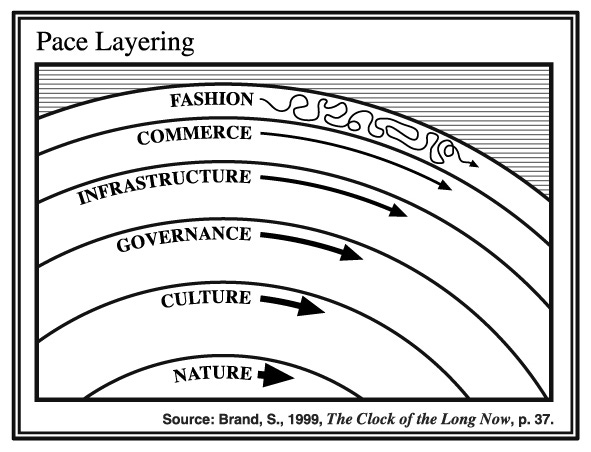
Sudden change in one layer (e.g., more brands in the fashion industry) produces shock in another layer (e.g., more carbon emissions in the atmosphere). From Brand’s article in the Journal of Design and Science:
Each layer must respect the different pace of the others. If commerce, for example, is allowed by governance and culture to push nature at a commercial pace, then all-supporting natural forests, fisheries, and aquifers will be lost. If governance is changed suddenly instead of gradually, you get the catastrophic French and Russian revolutions.
I won’t go on about the history of pace layers. But if you’re interested, The Clock of Long Now is your source. And Brand’s MIT article is a great summary.
Let’s talk about how this applies to organizations.
Organizational Pace Layers
Here’s a slide by Behzod on organizational pace layers.

From his essay, Dancing With Pace Layers:
If I was to map these pace layers out against an organization (and I’m sure that someone has and even more sure that one of you will point me towards it), V0.1 would probably look like:
(Individual) Work
Communication
Tools
Process
Culture
OrientationNiche
Work is a layer that moves faster than communication. Tools move faster than process. Culture moves slower than communication. And an organization’s niche may take a while until it informs individual work.
Pace layers help explain why:
Changing an organization’s mission (Niche) takes a while until it impacts people’s day-to-day work (Work)
Shipping an entirely new type of product often requires changes in our process and culture layer.
We want to stabilize our process when our tools change all the time
We want to stabilize our process when our organization’s niche pivots (e.g., “A massive re-org! We need to define process…”)
When we think of organizations as having distinct layers of pace, we better understand why some change efforts are slow while others are fast.
The OS Canvas and Pace Layers
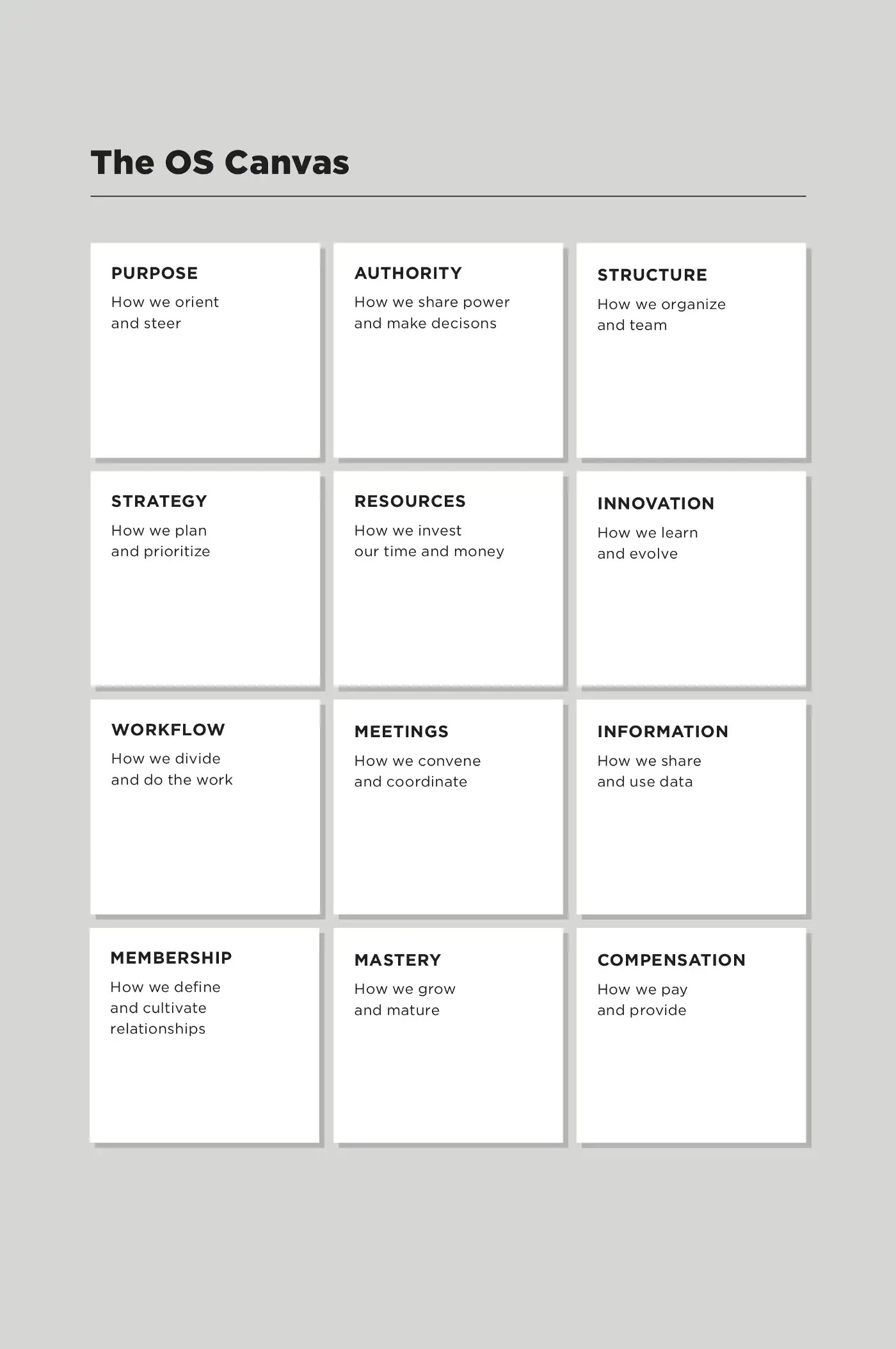
Pace Layers bring me back to when I used to use The Ready’s Operating System (OS) Canvas.
When I worked at The Ready, we used the OS Canvas to help teams understand their organization. We would ask teams to think about how their organization does Meetings, invests its Resources, Strategizes, Structures itself, and achieves and communicates its Purpose.
I thought about how each box in the OS Canvas can also be a Pace Layer:
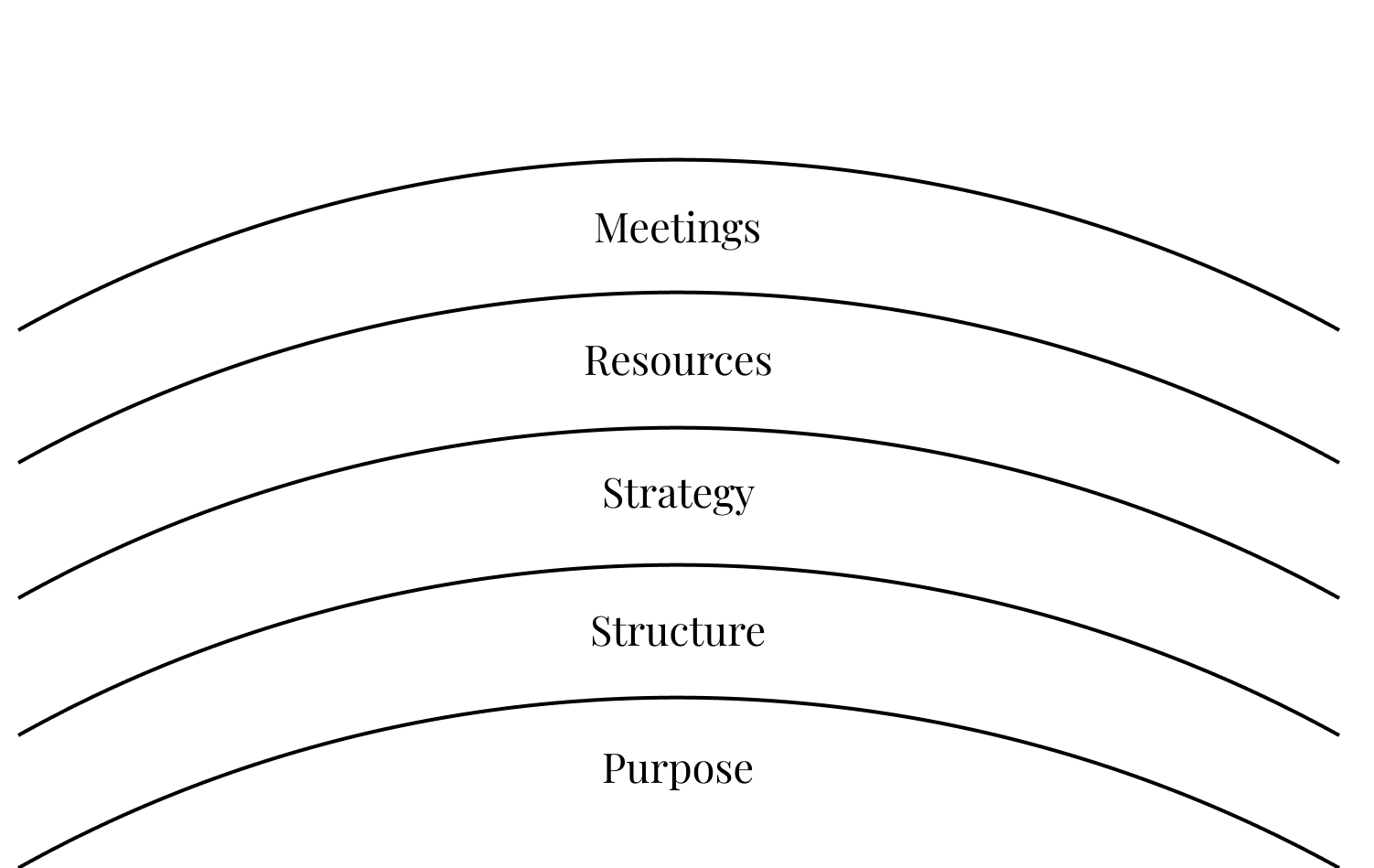
In almost every engagement, we started with Meetings. Meetings were the fastest to change. Teams can change their meetings more quickly than they can change their organization’s strategy.
When we helped teams change their meetings, they were changing their meetings in service of their organization’s existing strategy. We did not try to change our client’s strategy on day 1. If we did, we knew we’d be introducing too much change. Too much change doesn’t last.
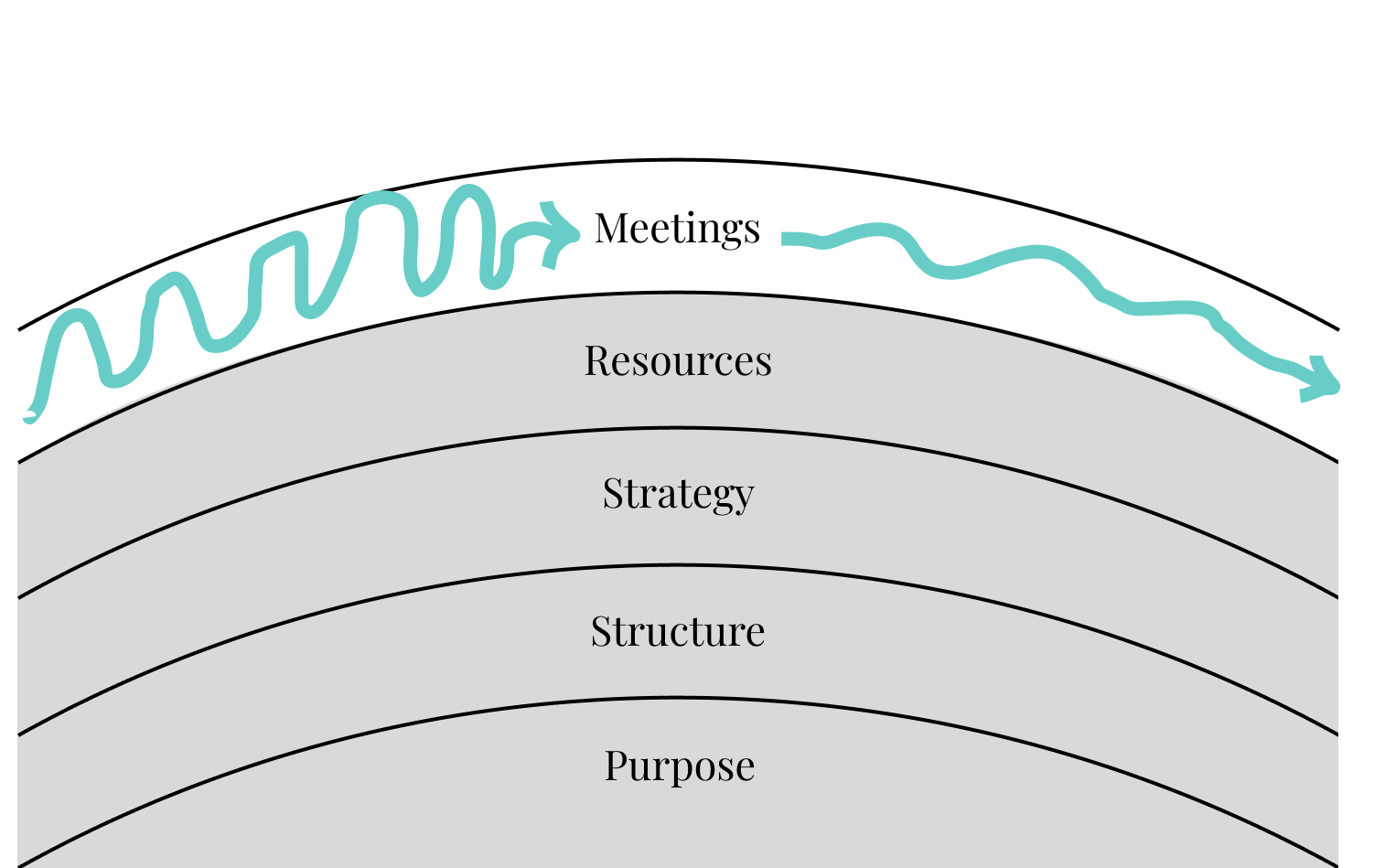
As Brand wrote, “each layer must respect the different pace of the others.”
The Strategy layer needed to stay stable as the organization’s Meetings were changing.
Eventually, the new types of Meetings would stabilize. Teams were able to facilitate these meetings on their own. And work got done more efficiently! But, teams started to wonder: was the existing strategy actually working?
Opportunities to change our Strategy emerged. When these opportunities presented themselves, we would help teams reflect on and iterate their strategies.
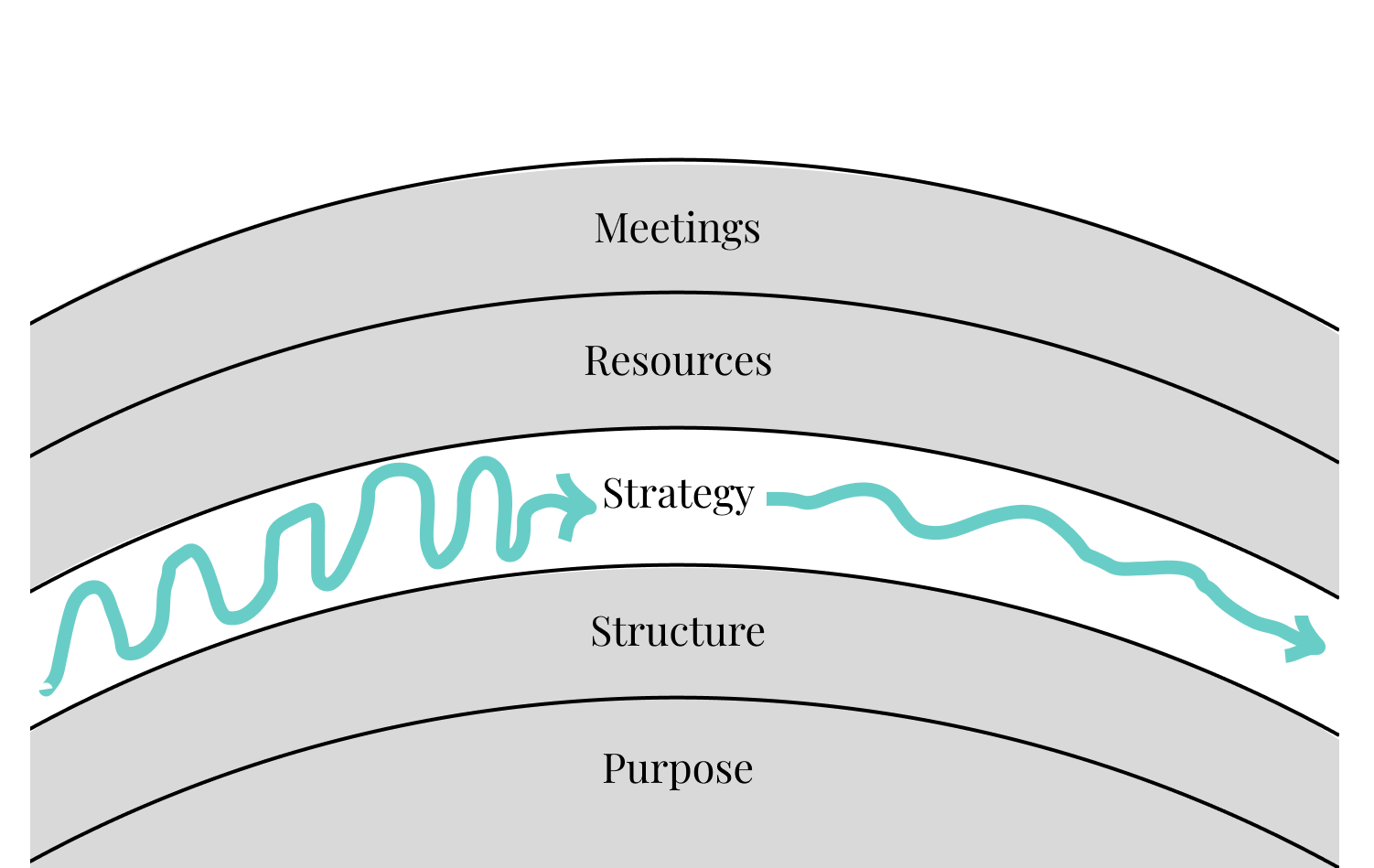
Eventually, we would help leadership iterate on the organization’s strategy. This opened up possible changes to the organization’s structure. Structure followed Strategy.
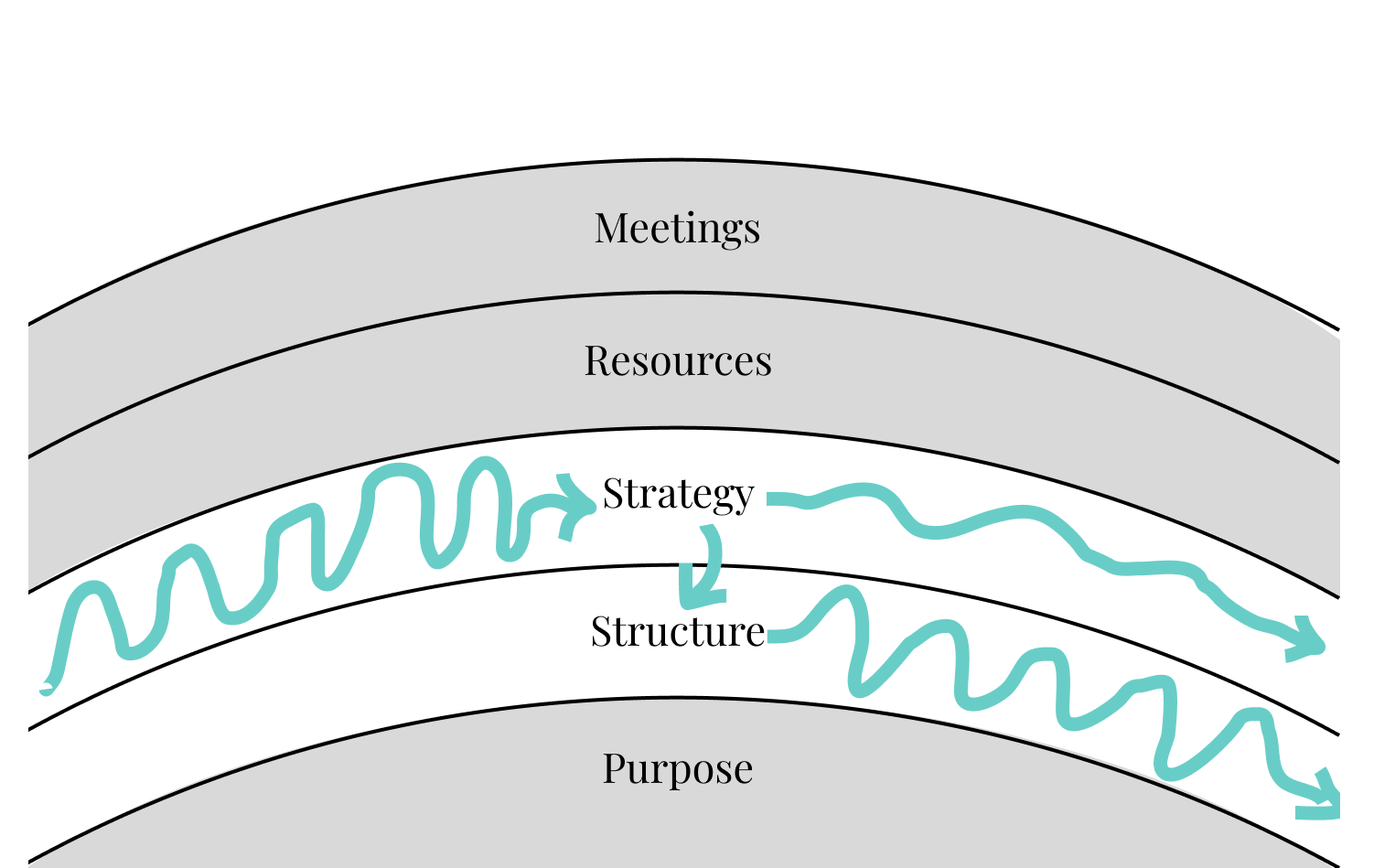
Changing Fast and Slow
I’m reminded that for changes to last, consider what shock is being made to the system when making that change.
If you want to suggest a new tool to the org, and you want it to stick, consider what needs to be stable for it to stick (maybe a Strategy or a Process).
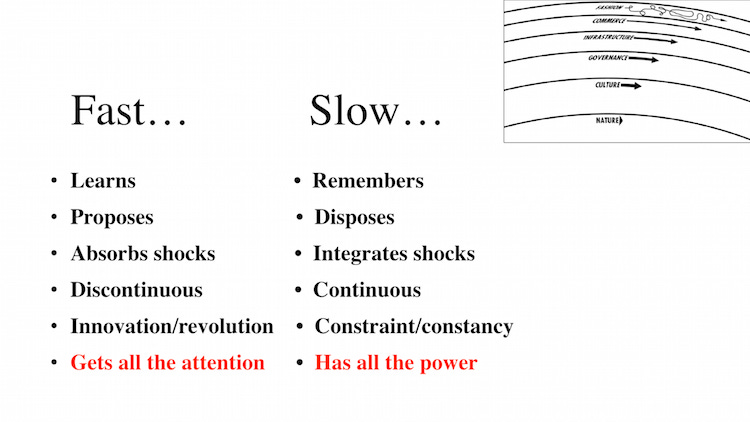
Some layers can better absorb shocks and change quickly (like Meetings or Information). Other layers are constant (like Purpose or Structure). Slower layers have power and are more difficult to change.
I’ll be using Pace Layers as a frame for more essays in the future!
How has pace layering changed your thinking?
Also good
CPJ on how pace layers and John Cutler’s mandate levels inform how we can make better maturity matrices (link)
Shoutouts to James Musgrave for presenting pace layers at a pecha kucha at our garden3D retreat! His presentation got me thinking more about it.
꩜꩜꩜
See you next week,
–tim